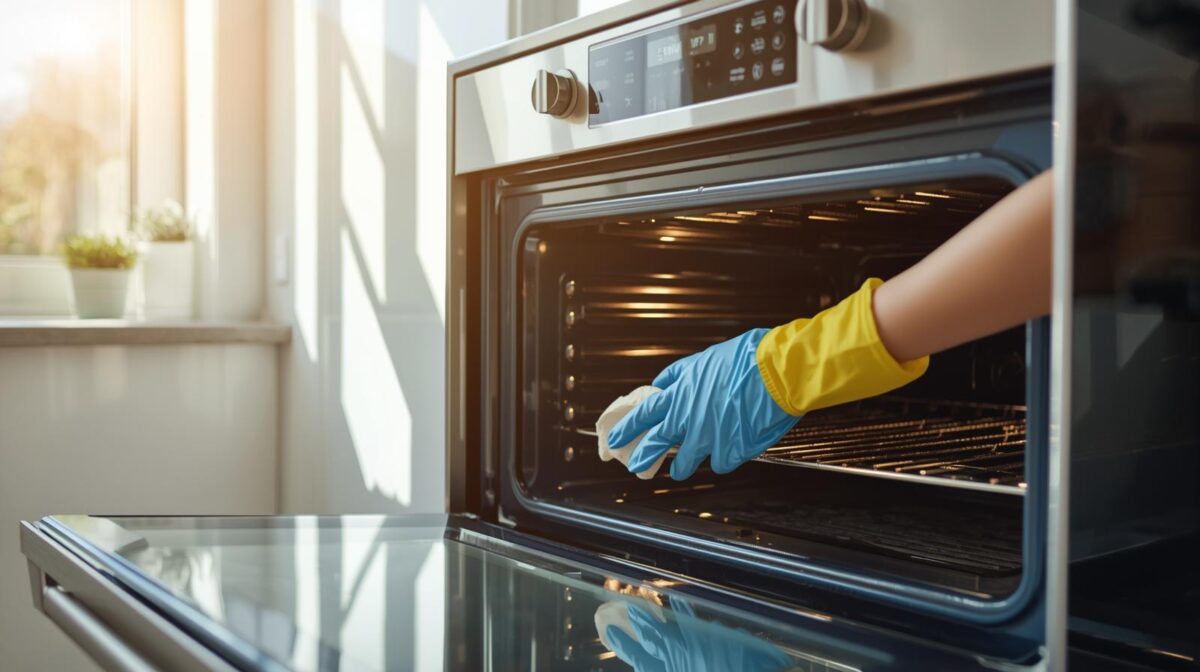
Oven cleaning does not have to be a big chore. With the right tips, tools, and techniques, learning how to clean an oven can be easy, safe, and even satisfying. Whether you are cleaning an oven naturally, using oven cleaners, or trying a homemade oven cleaner, this guide explains what to clean an oven with and how to keep it spotless with minimal effort.
The Importance of Regular Oven Cleaning
Regular oven cleaning improves hygiene, safety, and performance.
- Health and hygiene: Grease and leftover food can harbor bacteria.
- Better performance: A dirty oven may cook unevenly.
- Kitchen environment: A clean oven reduces smoke, odors, and fire risks.
- Longer lifespan: Knowing how to clean your oven properly extends its life and lowers energy use.
Common Oven Cleaning Challenges
Many people struggle when cleaning oven cleaning tasks due to:
- Baked-on grease and food residue
- Hard-to-reach areas like racks, shelves, and grates
- Risks from strong oven cleaners
- Extra time needed when cleaning an oven naturally
Natural Cleaning Solutions vs. Chemical Cleaners
| Chemical Cleaners | Natural Cleaners |
| Powerful and fast | Baking soda, vinegar, lemon |
| Strong fumes | Non-toxic and eco-friendly |
| Can irritate skin | Safer for homes |
| Best for heavy buildup | Safer for homes |
Natural methods such as cleaning oven with vinegar and soda or clean oven with lemon are popular for routine care.
Essential Tools and Supplies for Oven Cleaning
To clean an oven effectively, gather:-
- Commercial sprays or homemade oven cleaner
- Scrub brushes and sponges
- Microfiber cloths
- Old toothbrushes
- Gloves and goggles
- Paper towels
For racks, an oven rack cleaner or baking soda paste works well.
Step-by-Step Guide to Cleaning Different Types of Ovens
Conventional Oven
- Remove racks and trays.
- Apply cleaner to greasy areas.
- Let it sit for 20–30 minutes.
- Scrub and wipe clean.
This method works well when cleaning oven without self clean.
Self Cleaning Oven
If you’re wondering how do you clean a self clean oven:
- Remove large food pieces.
- Run the self-clean cycle.
- Let it cool and wipe away ash.
Steam Cleaning Oven:-
- Remove racks and trays.
- Add one cup of water.
- Run steam cycle (~30 minutes).
- Wipe softened residue.
Tips for Maintaining a Clean Oven Between Deep Cleaning
- Wipe spills after each use.
- Use liners to catch drips.
- Soak racks regularly.
- Prevent grease buildup to reduce oven cleaning cost over time.
How to Handle Tough Stains and Baked On Grease
- Baking soda paste: Leave overnight.
- Baking soda + vinegar: Ideal for clean oven with baking soda vinegar.
- Vinegar and soda: Excellent for cleaning oven with vinegar and soda.
- Commercial cleaners for heavy buildup.
Safety Precautions When Cleaning Your Oven
- Ventilate the kitchen.
- Wear gloves and goggles.
- Ensure the oven is cool.
- Follow instructions when learning how to clean an electric oven.
Eco-Friendly Oven Cleaning Alternatives
If you prefer cleaning an oven naturally, try:
- Baking soda paste
- White vinegar
- Lemon juice (clean oven with lemons)
These methods are safe and effective.
Conclusion
Knowing how to clean an oven properly makes kitchen maintenance easy. Whether you use electric stove cleaning products, natural solutions, or professional services, regular oven cleaning improves performance, safety, and longevity. A clean oven makes cooking healthier and more enjoyable.
A clean oven improves performance, extends its life and makes cooking more enjoyable. Follow these tips and make oven cleaning a simple, stress free part of your kitchen routine.
How do I clean a self-cleaning oven?
Remove large food pieces, run the self-cleaning cycle, then wipe ash after cooling.
Remove large food pieces, run the self-cleaning cycle, then wipe ash after cooling.
Yes! Apply a baking soda paste, spray vinegar, let foam, then scrub.
How often should I clean my oven?
Wipe spills after each use and deep clean every 2–3 months.
Are natural oven cleaners effective?
Yes! Baking soda, vinegar, and lemon juice remove grease safely.
Can I clean microwave ovens the same way?
Yes, use baking soda or vinegar, but avoid chemical sprays inside microwaves.